
Cricket, Consumerism, and Material Practices in Contemporary India: Reading The Zoya Factor through the Cultural Lens
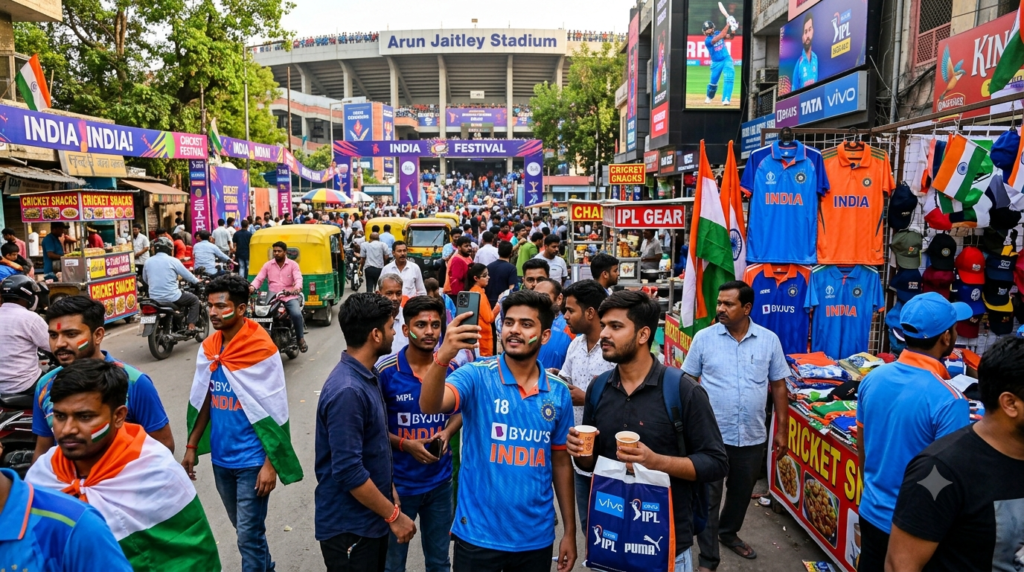
Manuja J C Research Scholar Department of English and Research centre Nesamony Memorial Christian College, Marthandam Affiliated to Manonmaniam Sundaranar University, Tirunelveli Dr. J.Giftlin Iyadurai Assistant Professor and Research Supervisor Department of English Nesamony Memorial Christian College, Marthandam Affiliated to Manonmaniam Sundaranar University, Tirunelveli. Abstract The Zoya Factor (2008), a best-selling novel by Anuja Chauhan, which comes under the genre of Indian Chick Literature, tells the love story of Zoya Singh Solanki, who is upset about being single, and Nikhil Khoda, the captain of the Indian Cricket team. The novel explores the themes of cricket, consumerism, and material practices. In this novel, superstition, luck, and belief are commodified and marketed in the world of Indian cricket and advertising. Zoya’s “Luck Factor” is influenced by media narratives that penetrate into India’s deep-seated obsession with luck, superstition, and cricket, combining them with advertising, consumerism, and romance. The novel presents contemporary urban India, where cricket functions as a powerful national symbol shaping collective identity and belief. The novel foregrounds material culture and consumer practices as central to social life in modern India. Cricket emerges not merely as a sport but as a powerful cultural symbol invested with collective memory, emotion, and national pride. The paper further explores the role of material culture in shaping social meaning by focusing on consumer goods, media spaces, branded environments, and professional workplaces. Through this portrayal, the novel reveals the complex relationship between popular culture, belief systems, and material consumption in post-liberalization Indian society. Keywords: Media Narratives, Consumerism, Cultural Lens, Material Culture, Indian Chick Literature Introduction The Zoya Factor (2008), a best-selling novel by Anuja Chauhan, tells the love story of Zoya Singh Solanki and Nikhil Khoda, the captain of the Indian Cricket team. In The Zoya Factor, Anuja Chauhan presents Zoya Singh Solanki, who is working as an advertising executive in the client service section at Zing Cola: AWA, one of the largest advertising agencies in India. She is an ambitious young woman who finds herself unexpectedly thrown into the limelight. She represents the professional, urban, post-liberalization Indian woman. She herself is a symbol of consumerism in 21st-century India. From the first chapter itself, it is clear that Zoya does not like the game of cricket and always calls it a “dumb game.” She feels more irritated when her boss calls her back from the biggest cola advertisement shoot with the famous Bollywood actor Shah Rukh Khan, whom she loves and has been eagerly awaiting the opportunity to work with. During the advertisement shoot, Monita, her friend, and Shah Rukh discuss his team Knight Riders’ performance in the last IPL. Zoya is called back by her agency in an emergency to attend a shoot with the Indian cricket team, who are in Dhaka for the ICC Champions Trophy. She is selected because her colleague, who needed to attend the advertisement shoot, is in the hospital because his father is in the ICU. Cricket and Consumerism Cricket is more than a sport in India; it is a cultural institution. It is a game that unites a nation of cultural, political, social, and economic diversity. The intense obsession of Indian advertising agencies with cricket is visible when Zoya says that her company is spending an enormous amount of money on this intensely patriotic game. During the last World Cup, the company claimed that its team had “the best batting line-up in the world,” yet the team lost on the very first day, and people started burning down boarding houses and totally destroying their factories. Now, the company is creating new advertisements to run during the World Cup slot again. After the game, the cricket team returned to India under the cover of darkness, with police jeeps trailing behind their cars to protect them from the wrath of the people. Zing Cola AWA is always involved in cricket-based advertising, which sometimes backfires. The company spends half of its annual advertising budget on cricket campaigns. When the players fail, the public says it is because they concentrate on advertisements, and people start hating the particular product being promoted. Zoya says that cricket is like a fever, a “Great Indian Disease,” worse than any other fatal disease, and that people should be vaccinated against it. “It’s the Great Indian Disease, I tell you. Worse than dengue or polio or tuberculosis. They should vaccinate us against it when we’re born, I thought gloomily as I queued up behind the long line of Dhaka-bound cricket freaks. One shot at birth, a couple of boosters over the years and you’re immune to cricket for life. No heartache, no ulcers, no plunge in productivity during the cricket season and no stupid bets that make you lose money and lead you to commit suicide.” (24) Cricket matches are inseparable from advertisements, sponsorships, and television ratings. Players are not only athletes but also brand ambassadors, while matches become prime-time events designed to maximise profit. Common people consider players as “God” and “King,” particularly in India, where they are idolised because of their immense success, their ability to unite a diverse nation, and the deep emotional, almost religious, connection fans feel during high-stakes matches. The ICC Cricket World Cup is a huge family event in Indian households. Everybody gathers around the television and cheers enthusiastically. People practise religious rituals to help their team win matches. Otherwise, they may hate the players until the next winning match. “Nikhil Khoda’s (the captain) hoardings were smeared with gobar from Rajkot to Calcutta! This is a sacred Indian ritual. People gather in hoards to chant bitter breast-beating slogans and smear fresh, still-warm cow droppings on the faces of cricket players on advertising billboards all over the country. It happens every time the headline ‘INDIAN CHALLENGE ENDS’ appears in the sports page, which is often.” (29) These depictions underline cricket’s “quasi-religious status” in India, where belief and superstition coexist with modernity. The repeated headline “Indian challenge ends” becomes a predictable cycle of hope and disappointment, reinforcing a culture of emotional consumption. Zoya as
