
Embodied Geographies: Ocean, Risk, and Environmental Intimacy in Tim Winton’s Breath
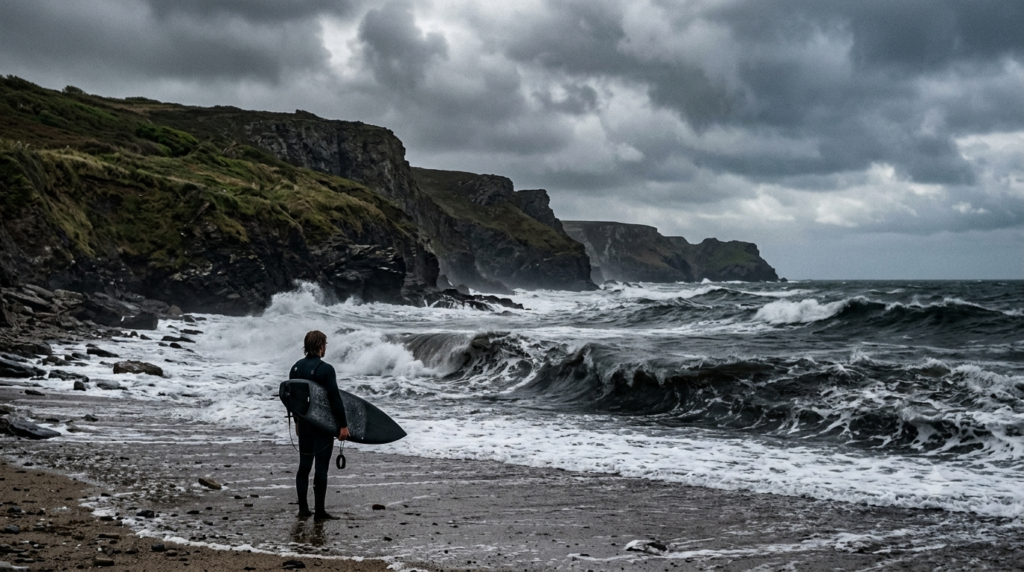
Dr. P. J. Giftlin Assistant professor of English, Department of English, Nesamony Memorial Christian College Marthandam. Abstract This paper studies the ideas of embodied geography, risk, and environmental intimacy in Timothy John Winton’s novel Breath, set in the coastal landscape of Western Australia in the 1970s, reimagines the sea as an active environmental force that profoundly shapes human identity and experience. Rather than serving as a static backdrop, the coast emerges as a dynamic space where the boundaries between body, mind, and nature are continuously tested. Through the practice of surfing, the novel foregrounds an intense human engagement with the ocean, framing the sea as a site of pleasure, danger, and existential risk. The narrative traces the protagonist’s movement from the relative security of an inland mill town to the volatile openness of the ocean, symbolizing a shift from stability to uncertainty. Surfing becomes a ritual of risk in which the self is placed perpetually “on edge,” confronting fear, vulnerability, and the limits of bodily control. The sea’s unpredictable power exposes the fragility of human ambition while simultaneously offering moments of exhilaration, healing, and heightened consciousness. This study examines how Breath articulates the relationship between surf culture, environmental risk, and self-formation, emphasizing the embodied experience of the coastal environment. Winton presents an ecological vision in which the self is inseparable from the rhythms, dangers, and possibilities of the sea, underscoring a deeply relational understanding of human-nature connection. Surfing; Sea; Risk; Coastal Landscape; Environmental Experience; Self-formation; Human-Ocean Relationship; Vulnerability; Embodied Experience; Ecological Identity Tim Winton is a profound Australian writer whose work is deeply embedded in the country’s landscapes, particularly its coastal regions. His fiction consistently explores the relationship between place and human experience, showing how the Australian environment shapes identity, culture, and interpersonal relationships. Breath (2008) is a significant Australian novel that examines the dynamic relationship between humans and nature. The novel vividly represents the Australian landscape, emphasizing oceanic risk, coastal spaces, and surf culture. Winton traces the coming-of-age of the protagonist, demonstrating how his identity and future livelihood are shaped by the tension between the inland rural environment of his childhood and the coastal and oceanic worlds he encounters through surfing. Winton’s portrayal of the wilderness reflects his belief in nature’s intrinsic value. In interviews, he describes the Australian landscape as a “source of grace,” a space that nurtures resilience and wonder (The Guardian). In Breath, Tim Winton presents geography as something learned through physical movement, bodily sensation, and risk, particularly through the ocean. In the novel, the protagonist, Bruce Pikelet, grows up in a weatherboard house in a mill town located in Western Australia. The landscape becomes meaningful to Bruce pikelet to only as he physical engaged with it, especially through the water. Pikelet early world as enclosed and limited. His understanding of the place begins locally shaped by the river rather than ocean. The distance highlights how the ocean initially exist as something remote. The river becomes his training ground, the frist environment where he tests his body and develops confidence in the water. Winton emphasizes the physical quality of the river to root the story in Australian Landscape, when he writes, “The river was brown with tannin and cold as hell” (Winton11). The description “brown with tannin” reflects the Australian environmental context, as the river runs through vegetated areas where decaying organic matter, such as leaves and bushes, stains the water. The phrase “cold as hell” conveys the biting, almost frozen quality of the water; although harsh, it remains slow-flowing and manageable for swimming. Its chill may be harsh but it does not threaten the boys in the way of ocean eventually will. This detailed reflect the natural environment of western Australia and emphasized how land shapes the water itself. Tim Winton’s Breath presents boyhood as a formative period shaped by physical risk and intimate engagement with the natural environment. The narrator recalls that his childhood was structured within a specific local environment, where daily life was closely tied to natural spaces. This environmental embeddedness is not merely descriptive; rather, it structures identity, social relationships. Through repeated references to fishing, river exploration, and ocean swimming, Winton foregrounds the lived experiences of the Australian coastal working class, emphasizing their dependence upon and familiarity with the sea as both livelihood and landscape. The ocean emerges as a site of longing, symbolizing freedom, adventure, and the testing of limits. However, paternal authority intervenes, positioning the sea as a space of danger and threat. As Bruce recalls his memory, “As a boy in Sawyer I yearned to swim in the ocean but the old man was firmly against it” (Winton 11), reveals the tension between desire and restriction in his early life. As a young boy, Bruce longs for the freedom and excitement represented by the ocean, yet his father’s strict opposition limits him. Winton’s use of the colloquial term “old man” reflects Australian cultural language while also highlighting the authority of the father figure. His father’s refusal is rooted in fear of the sea’s danger, as the ocean represents unpredictability, risk, and possible death. Thus, Winton frames swimming not merely as recreational activity but as symbolic performance. It represents survival, social legitimacy, and the assertion of selfhood within a community defined by its relationship to the ocean. The boy’s gradual movement from the relatively contained river toward the vast and unpredictable sea metaphorically enacts a rite of passage. This transition reflects a broader negotiation between safety and risk, dependence and autonomy. The river signifies childhood containment and familiarity, while the ocean embodies the expansive, dangerous domain of adulthood. Bruce says: In adolescence I was hooked on the creaturely thrills of momentum and submission. Half of a young man’s rebelliousness is the quest for a worthy force, something large to submit to. Hence the flirting with danger, the often-disastrous compulsions and addictions. For me, the secret release of surfing was the experience of being overtaken. Flying across a breaking swell, I loved the giddy speed, but what I needed
